One bus every 90 minutes.
That was what the timetable at Kofu Station bus terminal told me.
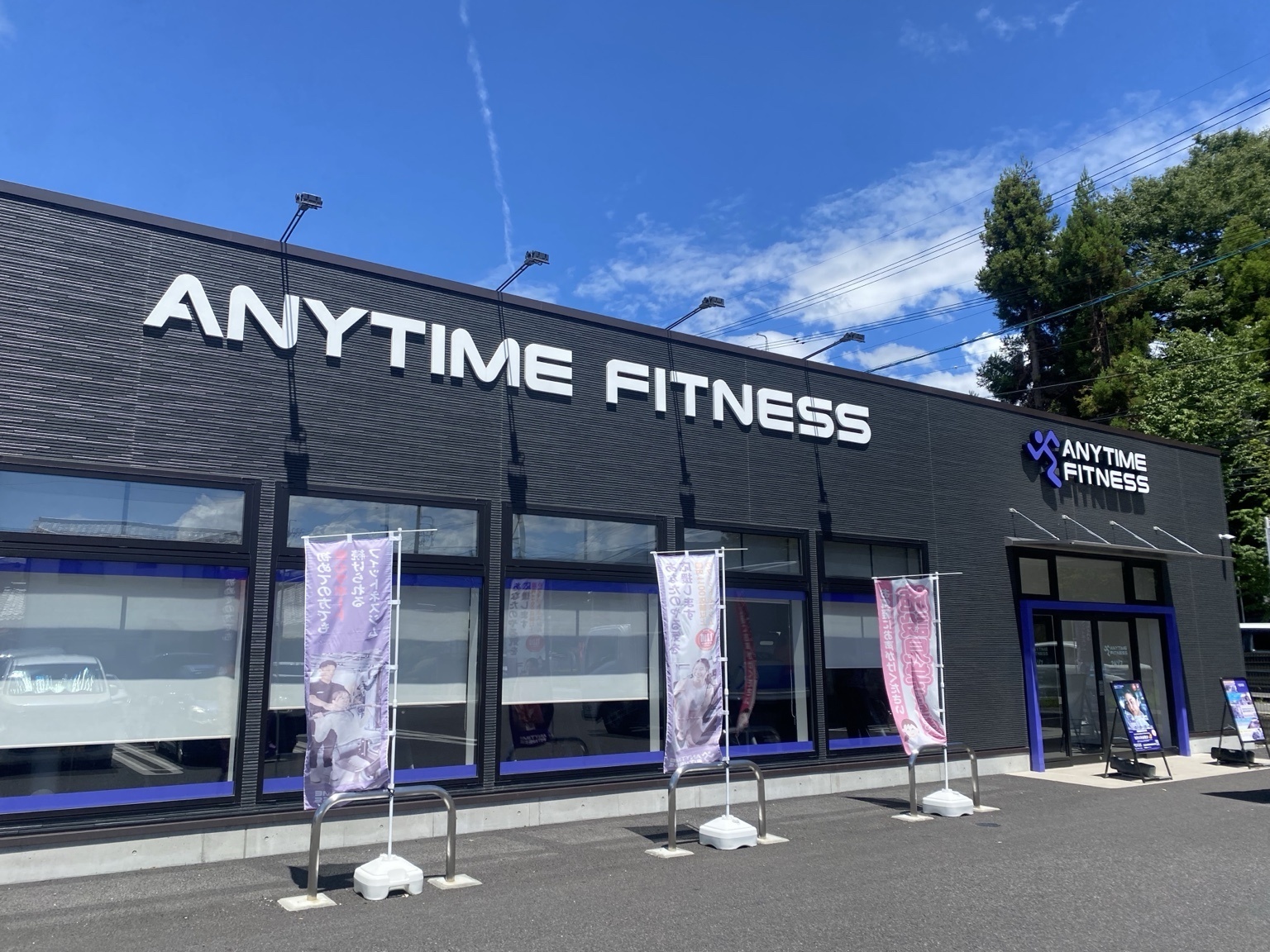
I have visited more than 80 Anytime Fitness locations across Japan. Some sit a minute from the station gates. Others take a 20-minute walk. But this was the first time that simply arriving felt like the hard part.
Yamanashi Kotsu route 58. Miss it, and the next one is an hour and a half away. Wait at the stop under the August sun, or walk back to the station. There are not many options.
I went anyway. That, too, is part of the pilgrimage.
And once I was inside, it made sense. This gym has something the ones in central Tokyo do not have: room to breathe.
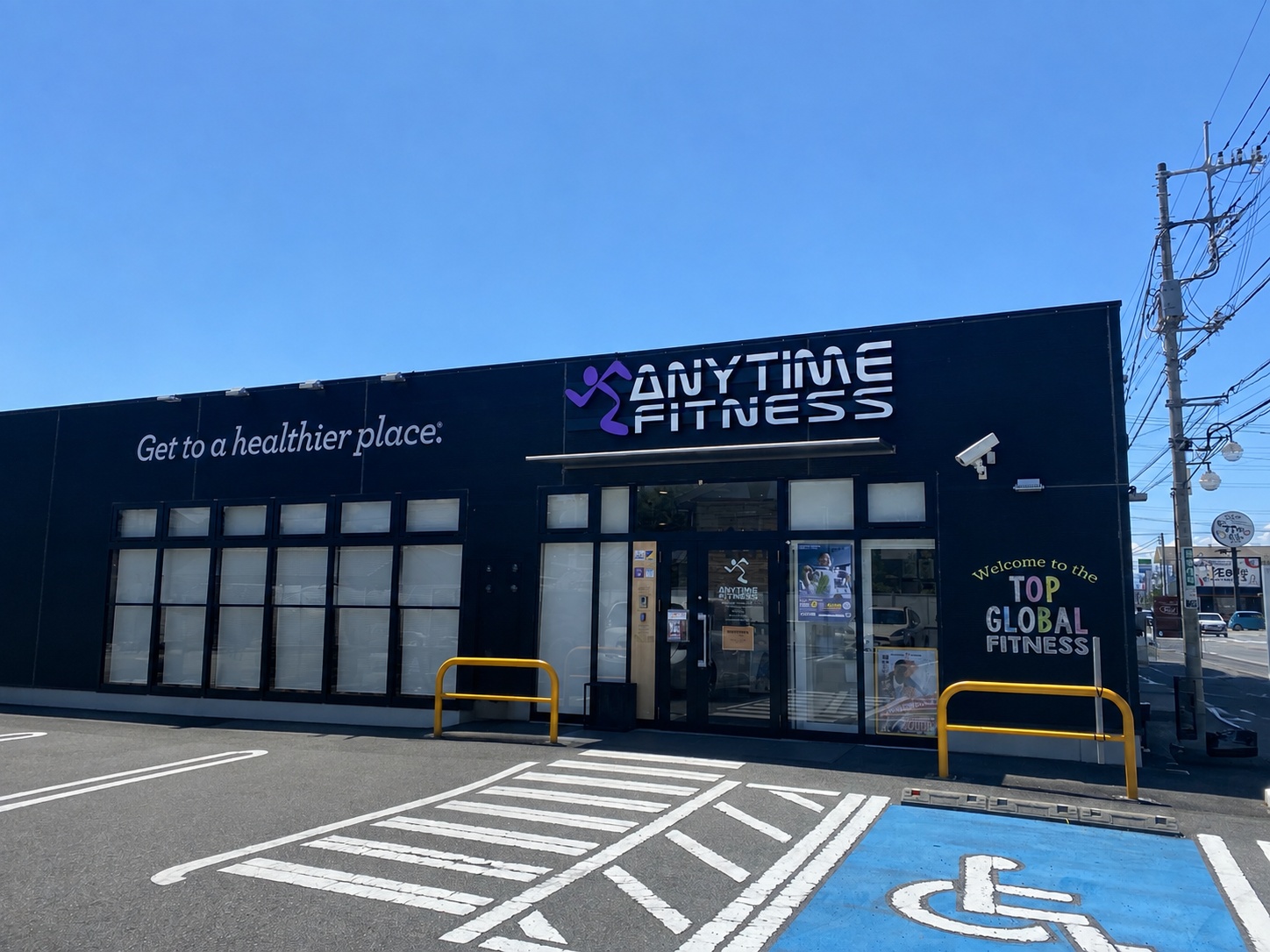
| Gym | Anytime Fitness Kofu Kokubo |
|---|---|
| Address | 1F, 1-21-13 Kokubo, Kofu, Yamanashi 400-0043 |
| Nearest Station | Kofu Station (JR Chuo Main Line / Minobu Line). No walking time listed officially; 13 minutes by car |
| Phone | 055-225-5260 |
| Hours | Open 24 hours, year-round |
| Monthly Fee | ¥7,678 (tax included) |
| Equipment Brands | Life Fitness / Wattbike / Concept2 |
| Racks & Smith Machines | 5 |
| Benches | 4 (3 adjustable, 1 flat) |
| Date Visited | August 10, 2026 |
| Official Site | Store page |
Facilities
- Hydrogen water dispenser
- Supplement dispenser
- Private showers
- Private changing rooms
- Wi-Fi
- Body composition analyzer
- Personal trainers
- Parking
- Bicycle parking
- AED
- Rental lockers (available at the time of my visit)
- Free for high school students
There is no free water dispenser here. Instead, the gym offers hydrogen water machines.
This is worth knowing in advance. Bring your own drink, or fill up before you come.
Getting There
This was the second day of a 3-day trip. I had been in Fuji the day before, and crossed the mountains into Kofu on the Fujikawa limited express along the Minobu Line.
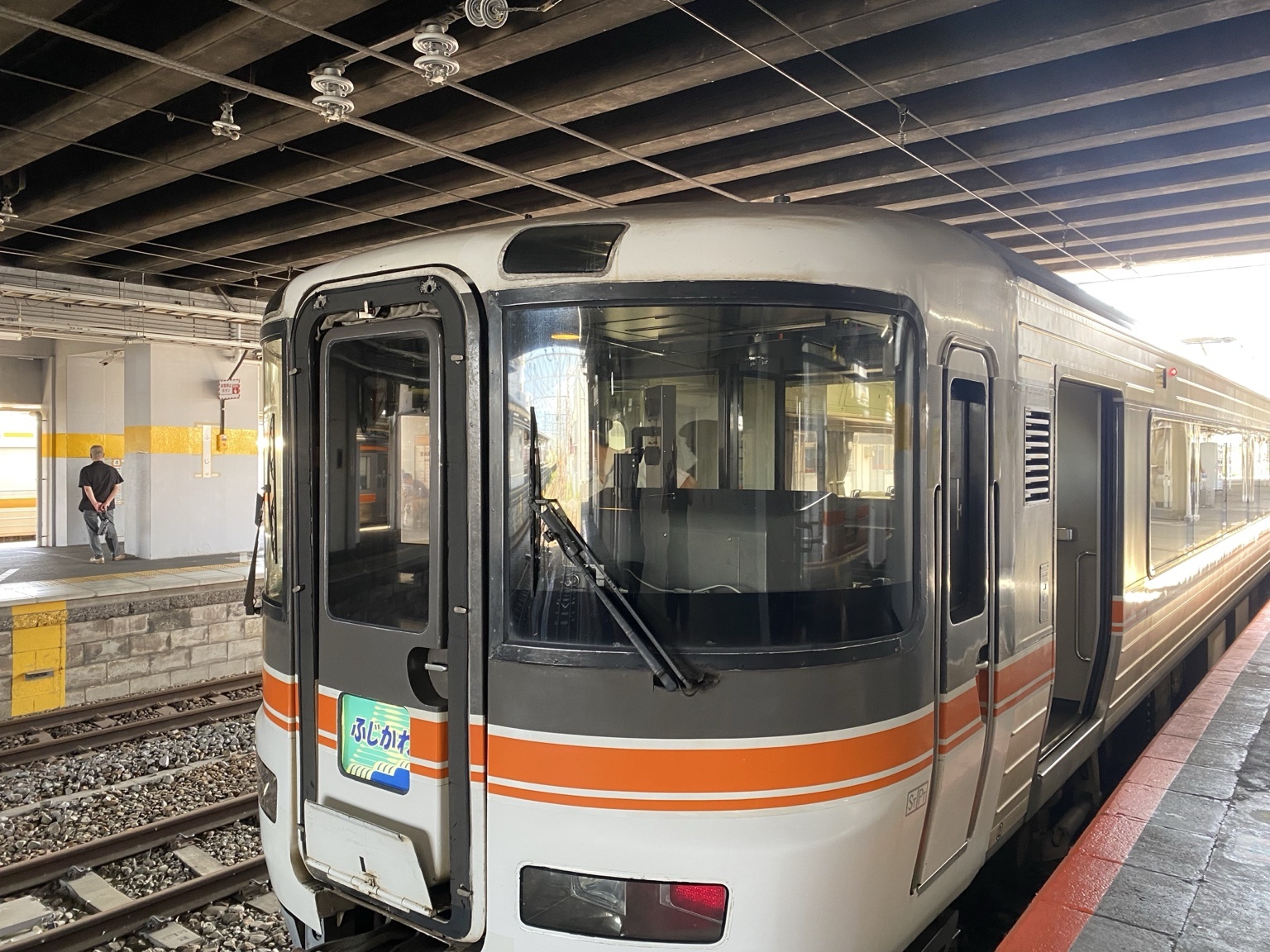
From Kofu Station, it is a single bus ride.
Walk 3 minutes to the Kofu Station bus terminal and find platform 3. Take Yamanashi Kotsu route 58 bound for Yamanashi University Hospital. Get off at Nansei Chugakko, then walk 4 minutes.
The trip takes 19 minutes and costs ¥280, with no transfers. On paper, it sounds simple.
The problem is frequency. Buses run roughly once every 90 minutes.
The official site lists no walking time at all, only “13 minutes by car.” That is an honest way to put it. This is a place you drive to.
If you are coming by train and bus, check the return timetable before you start your workout. Finishing a session, walking to the bus stop, and learning that the next bus is 90 minutes away is a genuinely rough experience.
One practical note. Just outside the ticket gates at Kofu Station, there is a free water refill station.
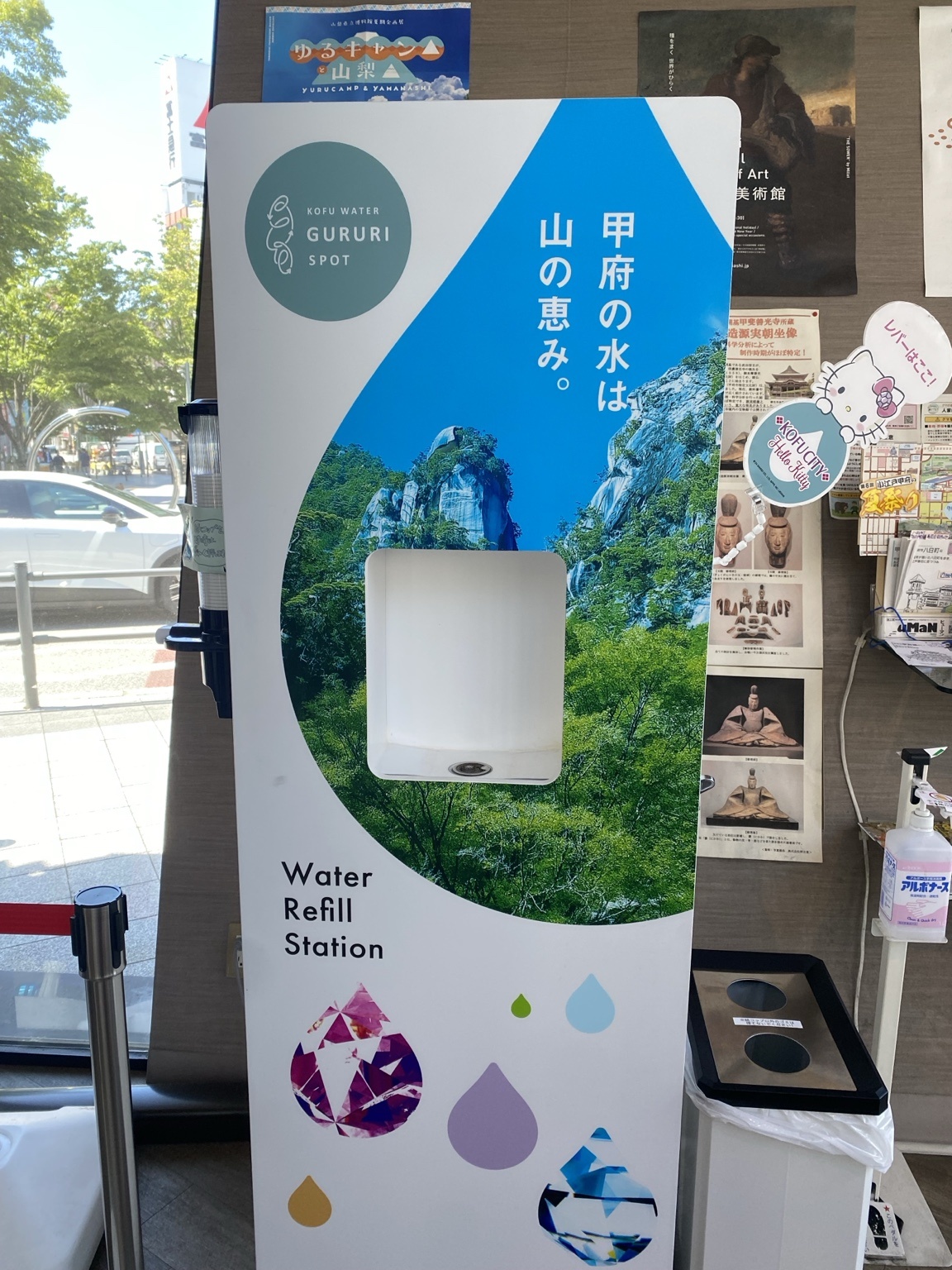
Given that the gym has no free water dispenser, filling your bottle here is the right move. If you carry one, do not skip it.
Inside the Gym
A standalone building on a single floor. The layout is somewhat long and narrow, but the space is generous.
The atmosphere reminded me of a municipal sports center. High ceilings, and sound that carries a little further than usual.
Weight-stack machines sit near the entrance. Plate-loaded equipment fills the free weight area at the back.
Every machine has space around it. It looked almost like a trade show floor. You will not bump your elbow into the machine beside you, and that alone changes how you move.
Racks and Smith machines total 5 according to official figures. In the center of the free weight area stands a separate rack, apparently set aside for deadlifts.
There are 4 benches: 3 adjustable and 1 flat. The path to the dumbbell rack is wide and unobstructed.
The stretching area is matted, with enough distance between spots that nobody feels close.
But the thing that surprised me most here was not the equipment.
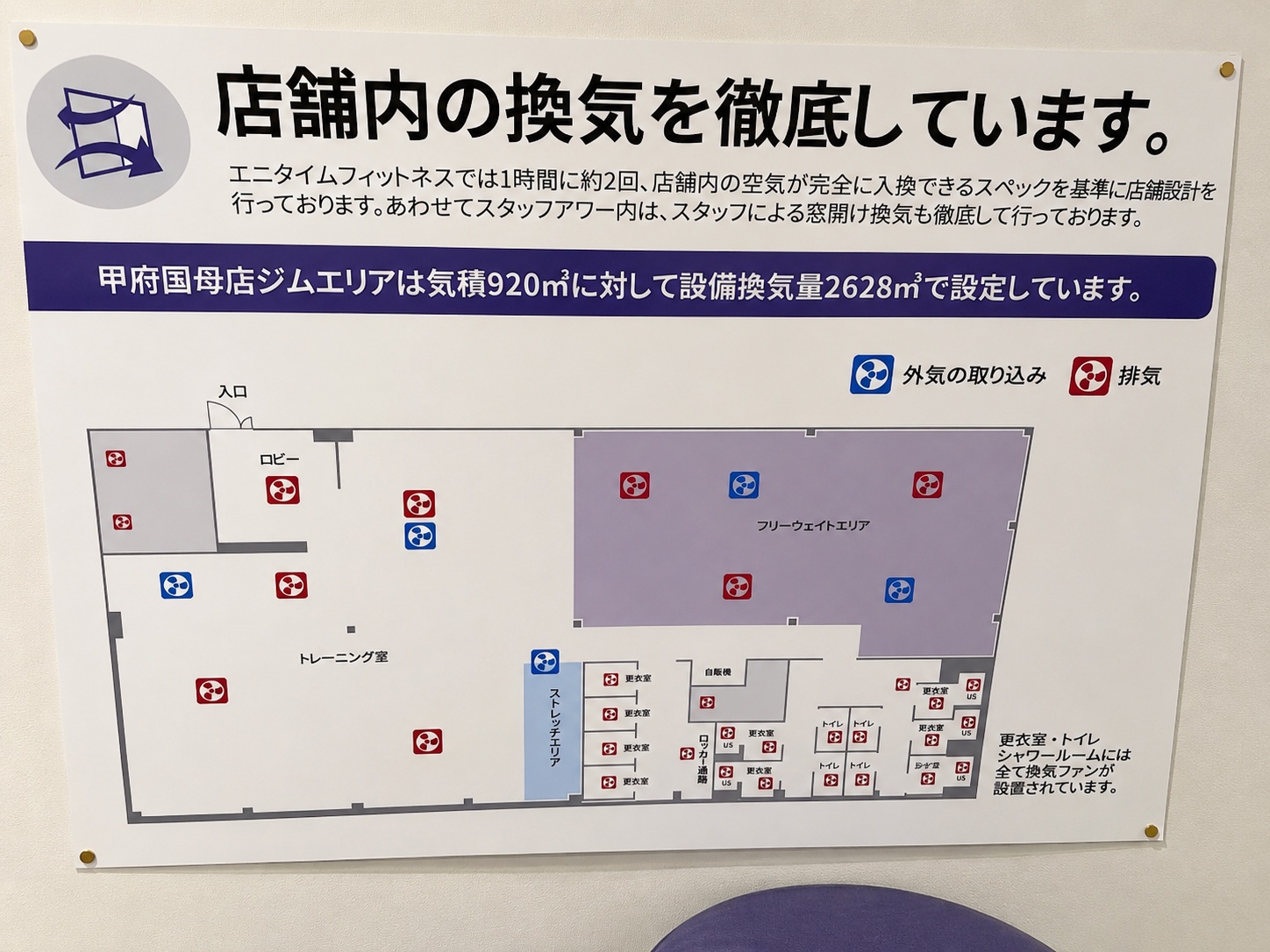
A ventilation diagram was posted on the wall.
The gym area at Kofu Kokubo is set at 2,628 cubic meters of ventilation capacity against 920 cubic meters of air volume.
Anytime Fitness designs its locations to a standard where the air inside is fully exchanged roughly twice per hour. I already knew that.
What I had never seen was a location publishing its own numbers, mapped onto a floor plan showing where the intakes and exhausts sit.
The diagram covers the lobby, training room, free weight area, stretching area, changing rooms, and shower rooms. Blue marks fresh air intake, red marks exhaust. A note explains that every changing room, restroom, and shower room has its own ventilation fan.
Maybe the sense of space here was not only about floor area. The air is moving.
How Crowded It Was
I visited late on a weekday morning.
There were a fair number of people, and the benches were occupied.
Still, nothing that would leave you waiting in line. With this much distance between machines, the same headcount feels far less dense.
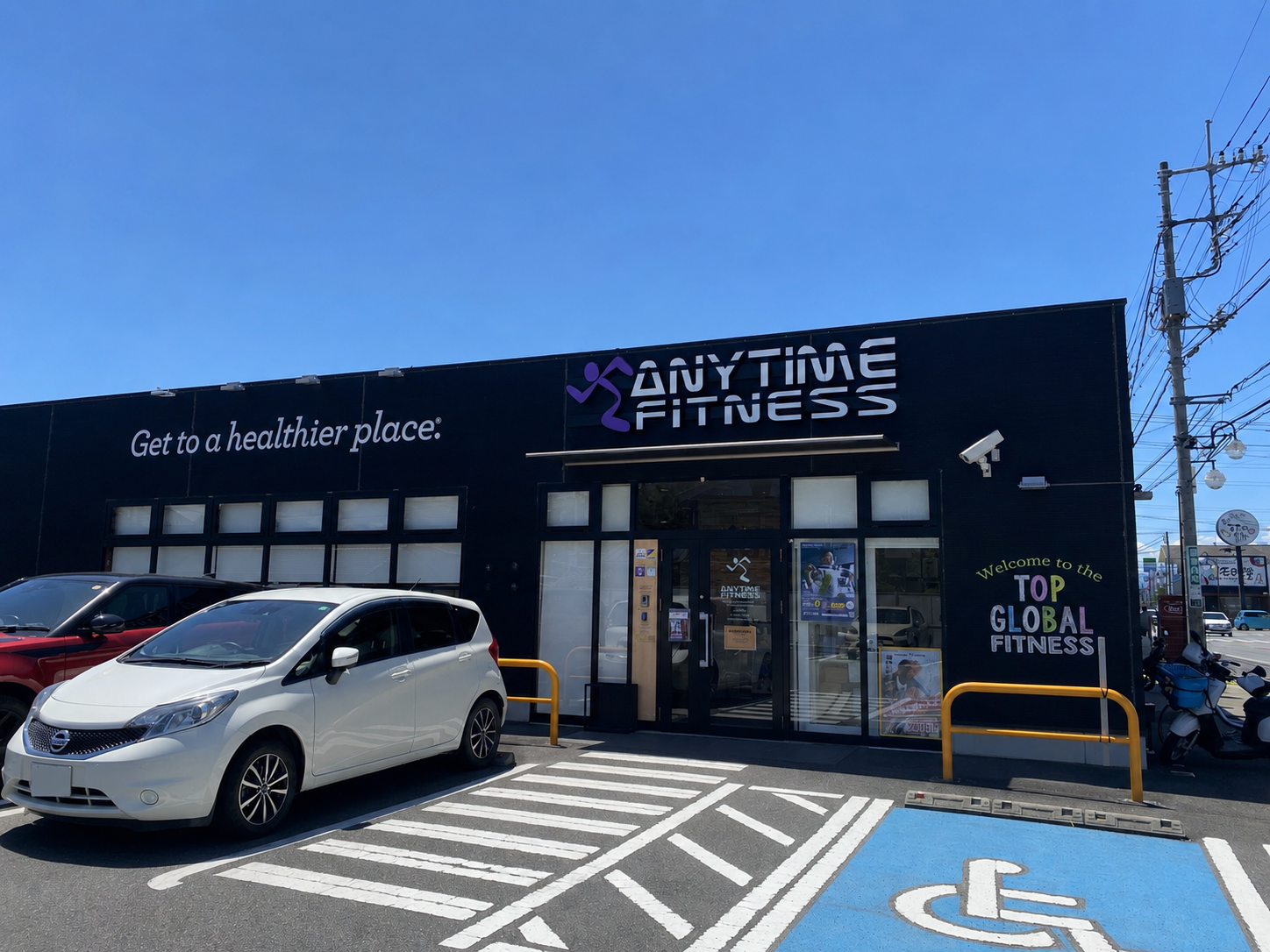
The parking lot was lined with cars. I doubt many members arrive by bus.
The Surrounding Area
To be straightforward about it: there is not much around the gym.
This is roadside territory, the kind of place you drive past rather than walk through.
The city itself is over by the station.
I stayed in Kofu the night before, and walked around the station area.
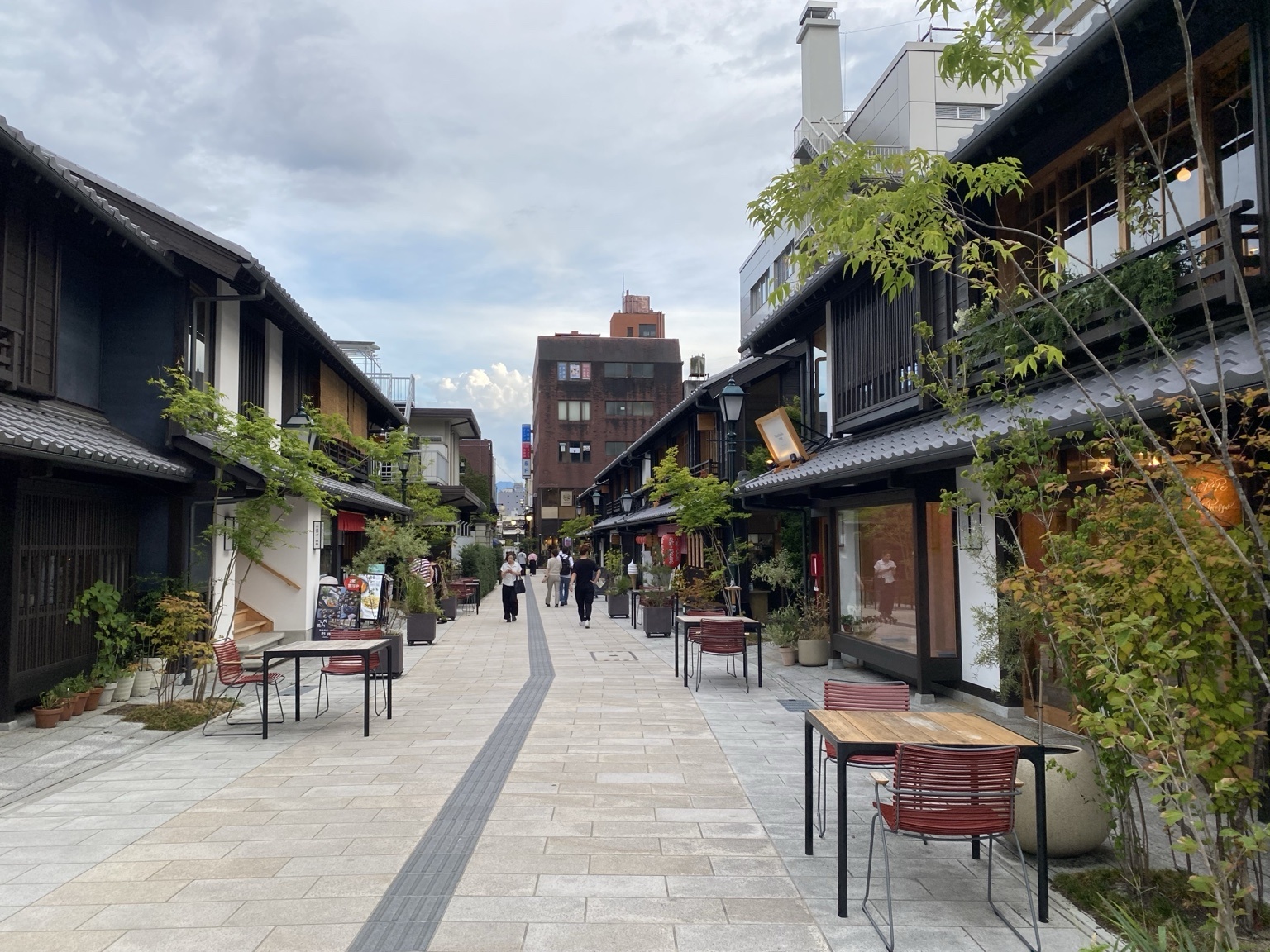
Koshu Yumekoji. Stone paving lined with buildings in a traditional townhouse style. It was clearly developed with visitors in mind, but it is not loud.
Outside the station, Takeda Shingen sits in bronze.
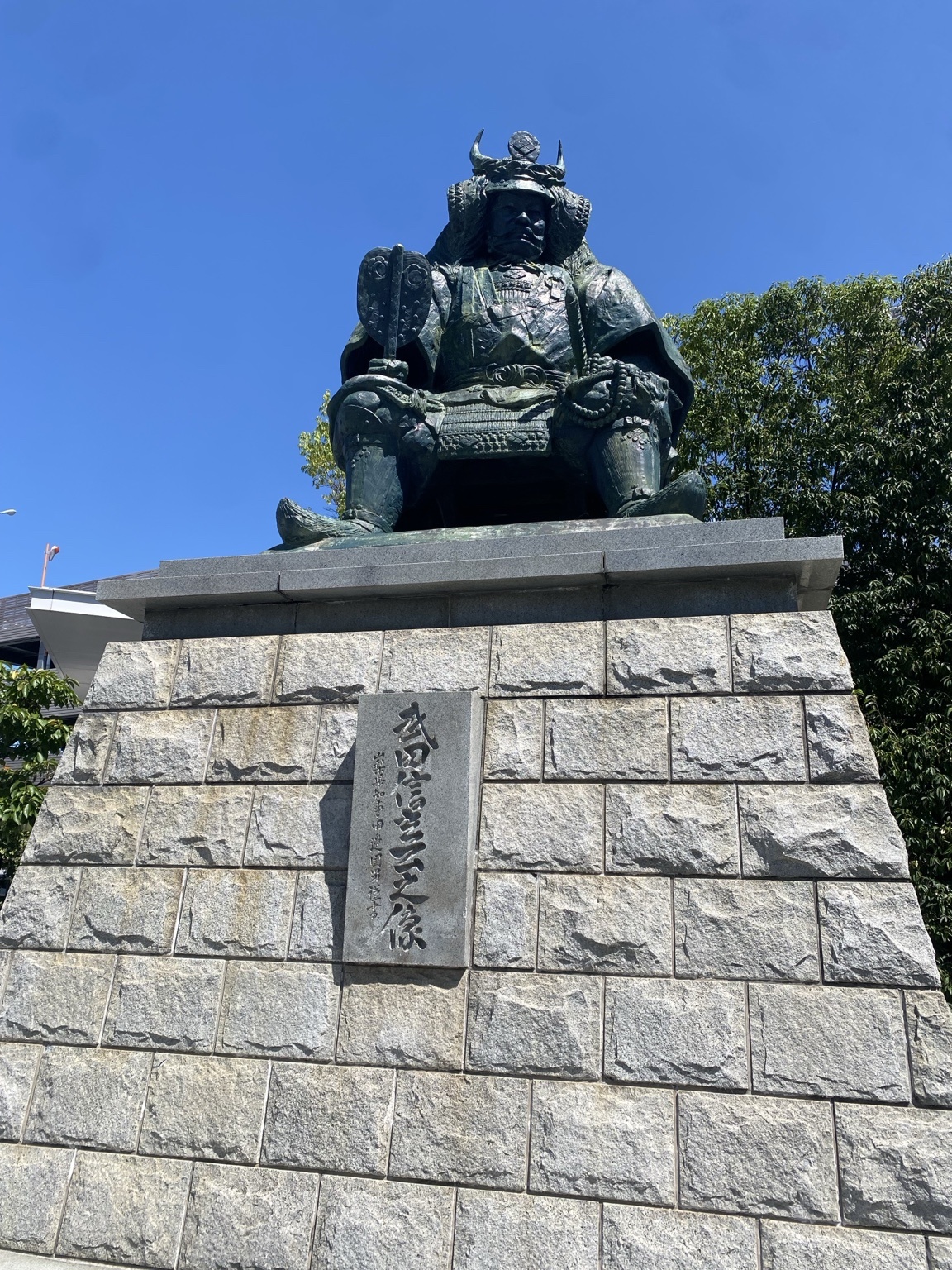
He is seated on a camp stool in full armor, holding a war fan. Kofu means Shingen, and the statue makes that obvious.
But walk a little further, and there is a second statue.
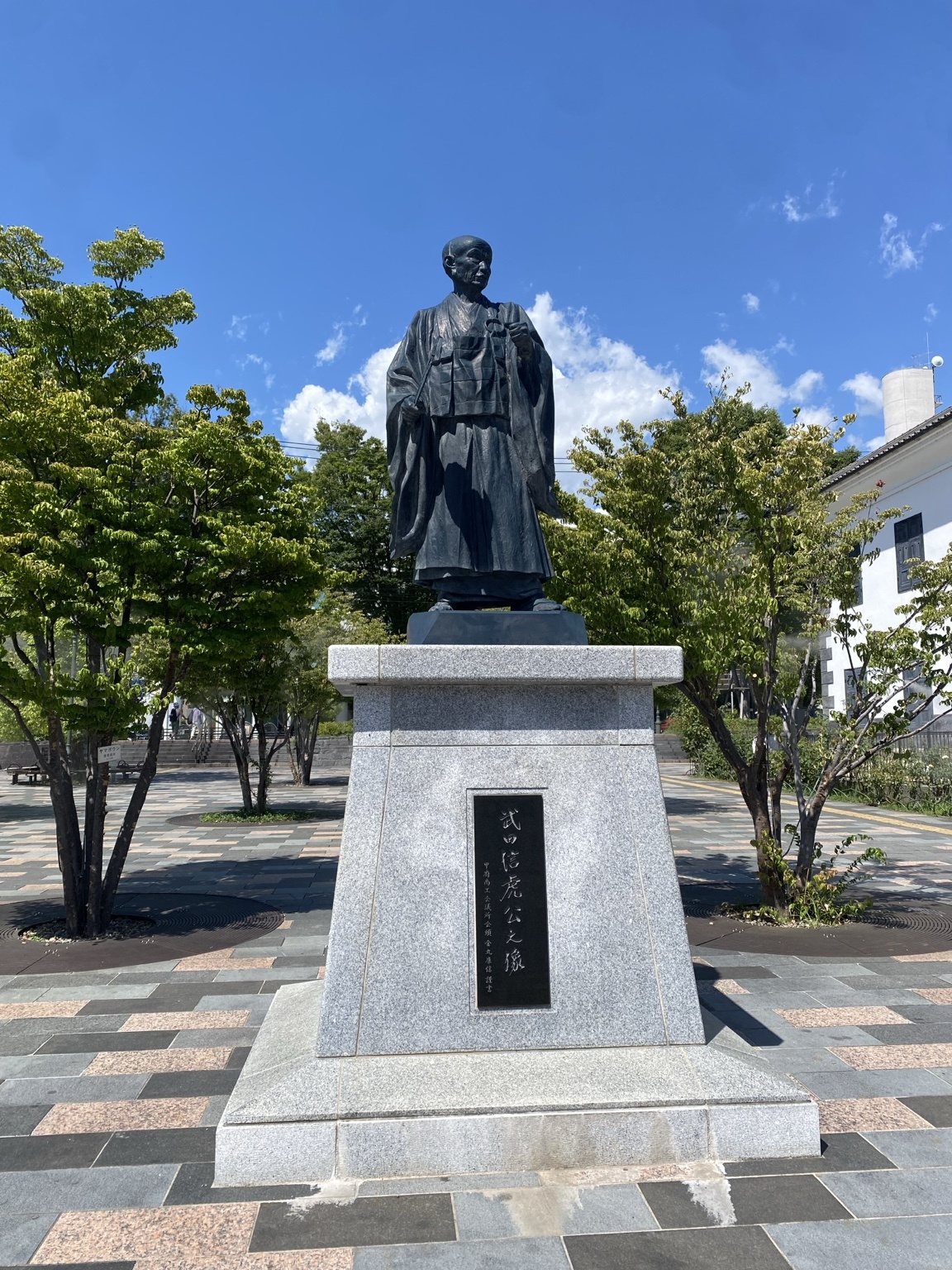
Takeda Nobutora, Shingen’s father. He stands in monastic robes, and the mood is entirely different.
Nobutora is credited with building the city of Kofu itself, though he may be better known for having been driven out by his own son.
Father and son, standing separately in front of the same station. Nothing here declares one above the other. That says something about how this city handles its own history.
For dinner, I had hoto.
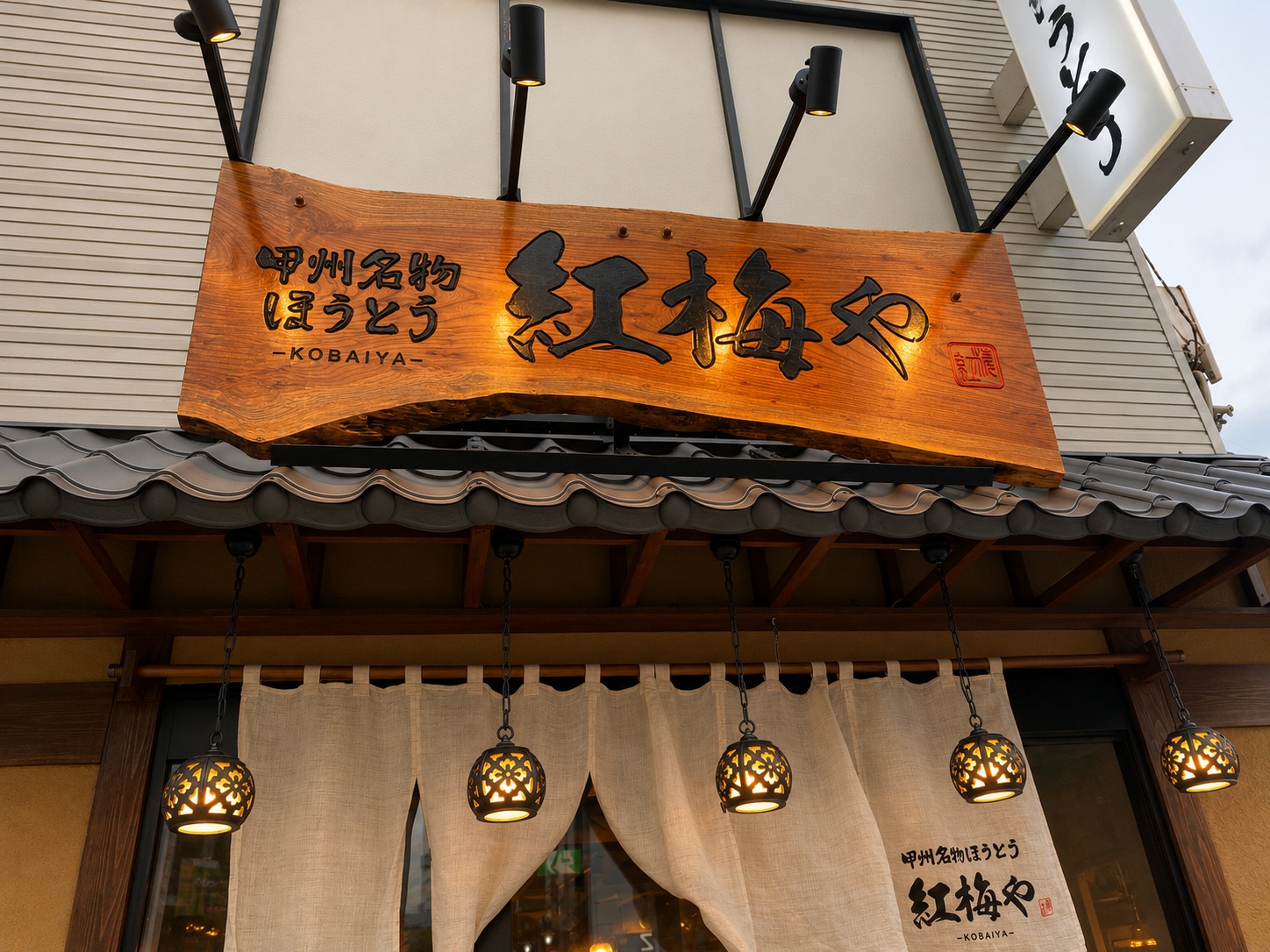
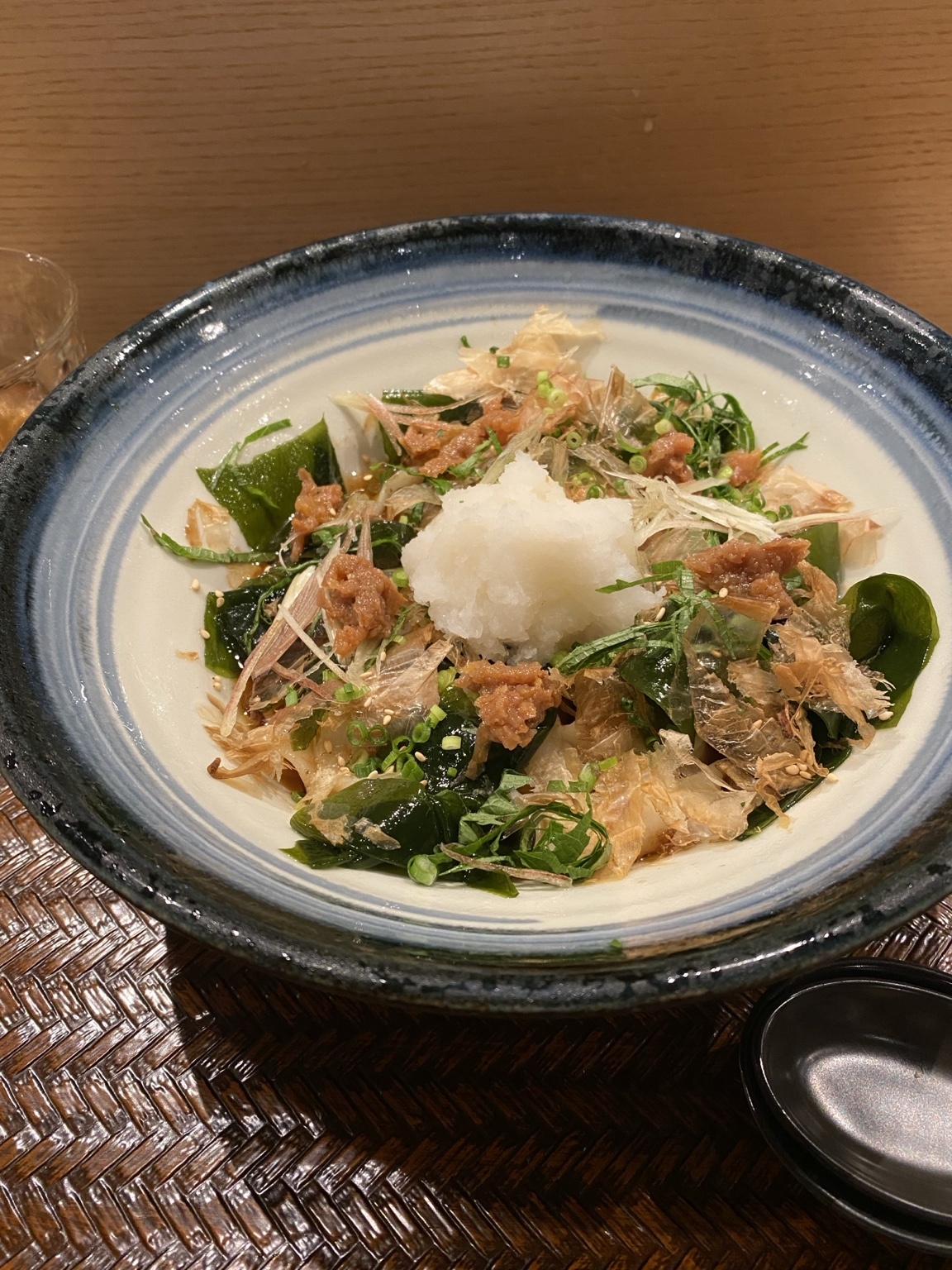
They served a cold version. Pickled plum paste and bonito flakes, with grated daikon, myoga, and wakame on top.
I had always thought of hoto as a simmered dish, but this was something else. The wide, flat noodles were chilled and firm, and the garnishes cut through. In summer, this is the better version.
Afterward, I walked to Maizuru Castle Park.
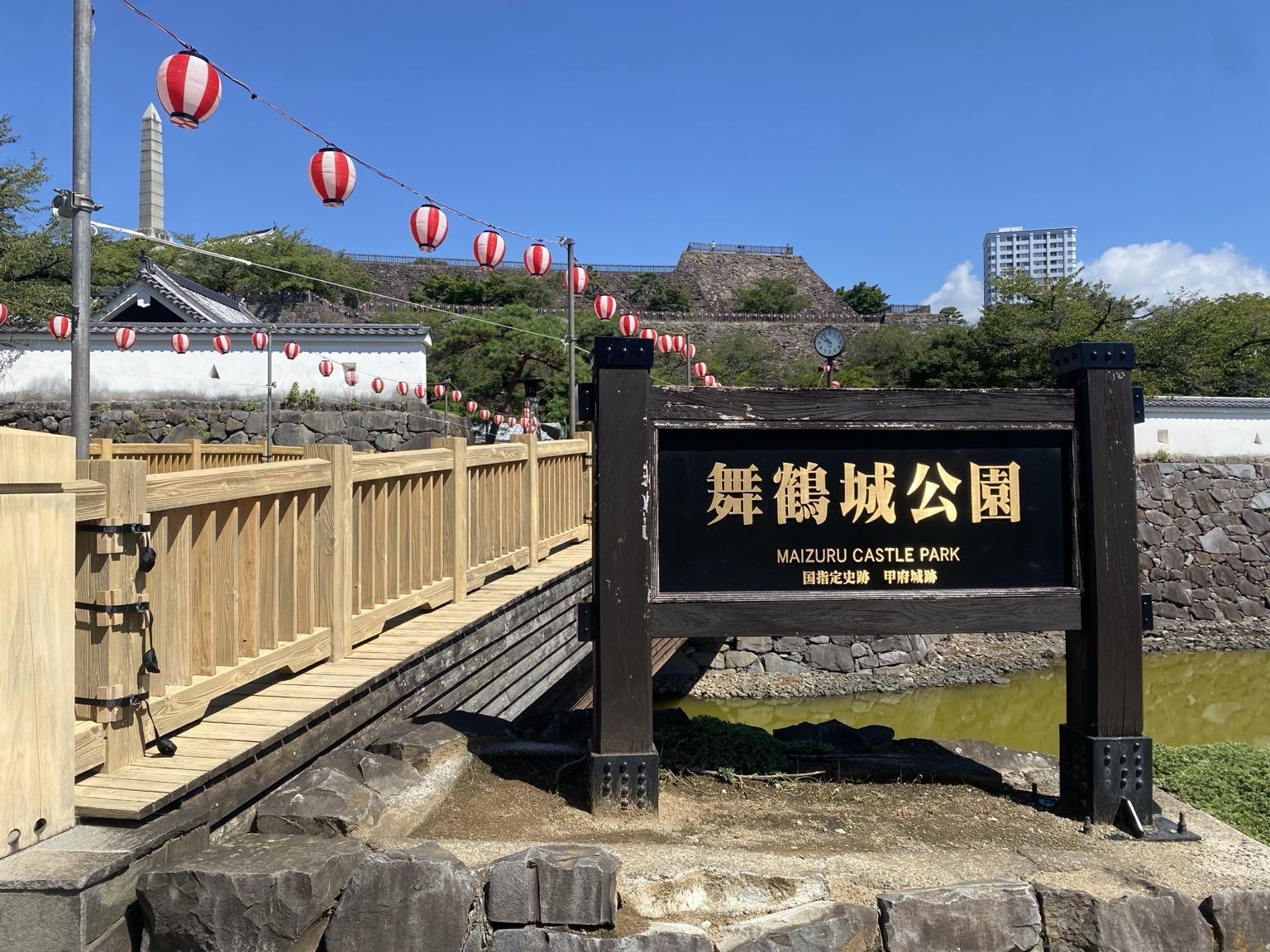
The ruins of Kofu Castle, a short walk from the station. The stone walls remain, and you can climb to the keep’s base.
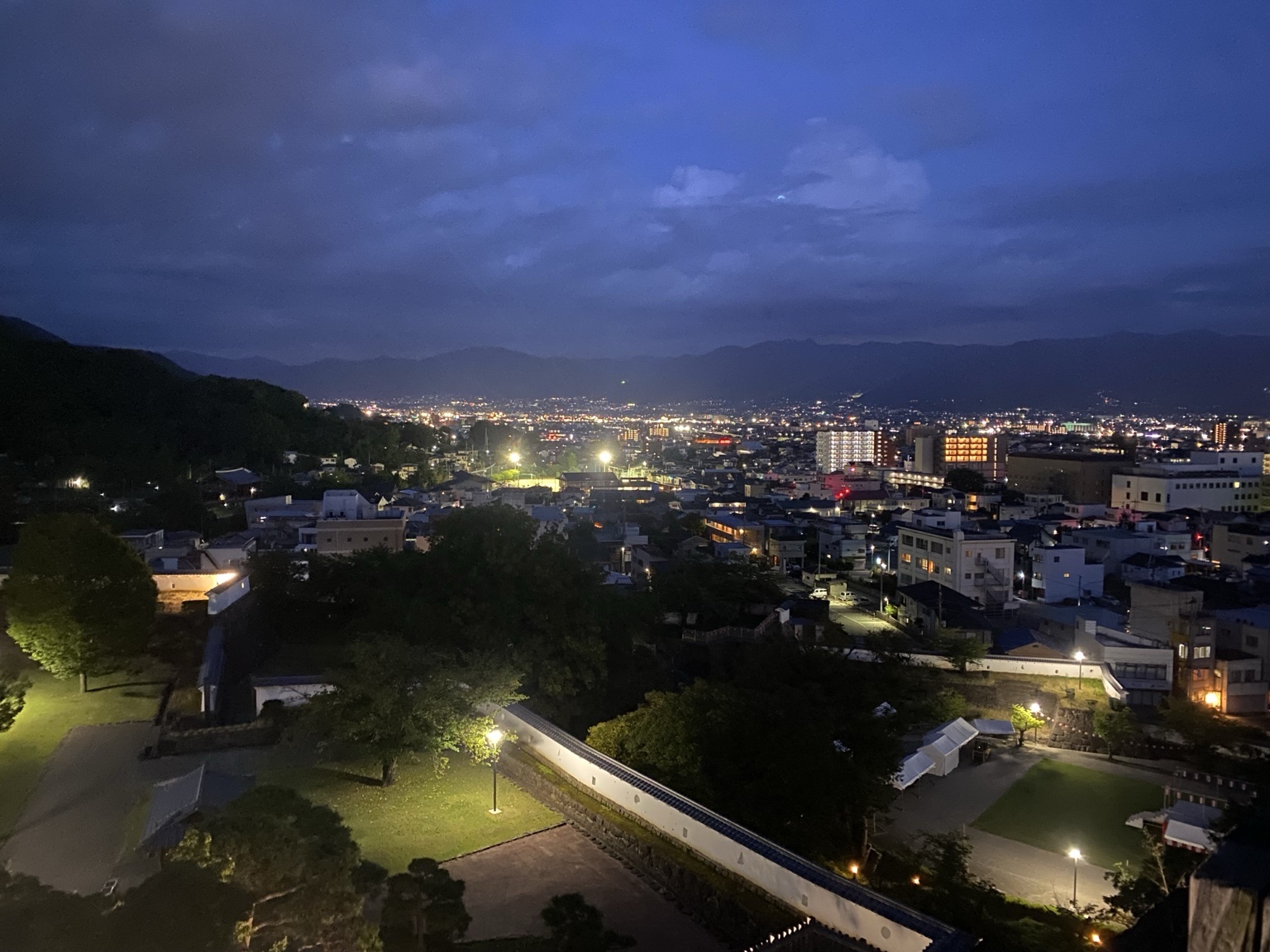
From the top, the whole city opens up. The lights of the basin run all the way to the base of the mountains.
I also went up to the observation lobby at city hall, but the view from Maizuru Castle was better. Nothing gets in the way.
One more thing caught my attention in the city center.
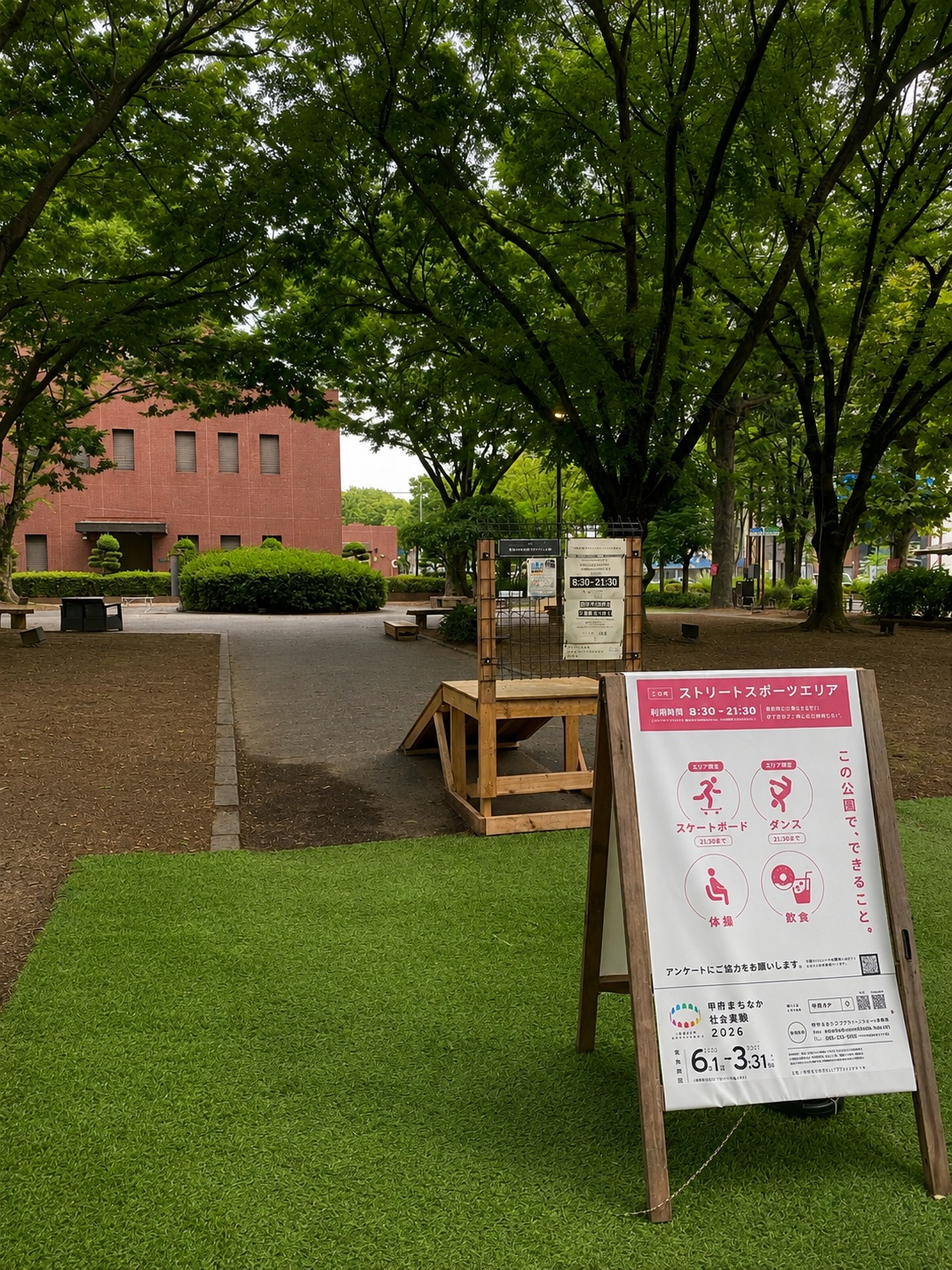
A park downtown had been set up as a street sports area. Skateboarding and dance are permitted until 21:30, as part of an initiative called the Kofu Machinaka Social Experiment 2026.
A gym that never closes, and a public space for movement that opens within fixed hours. This city has both.
The next day, after the gym, I went to Takeda Shrine. It is known as a place to pray for success in contests, so I did.
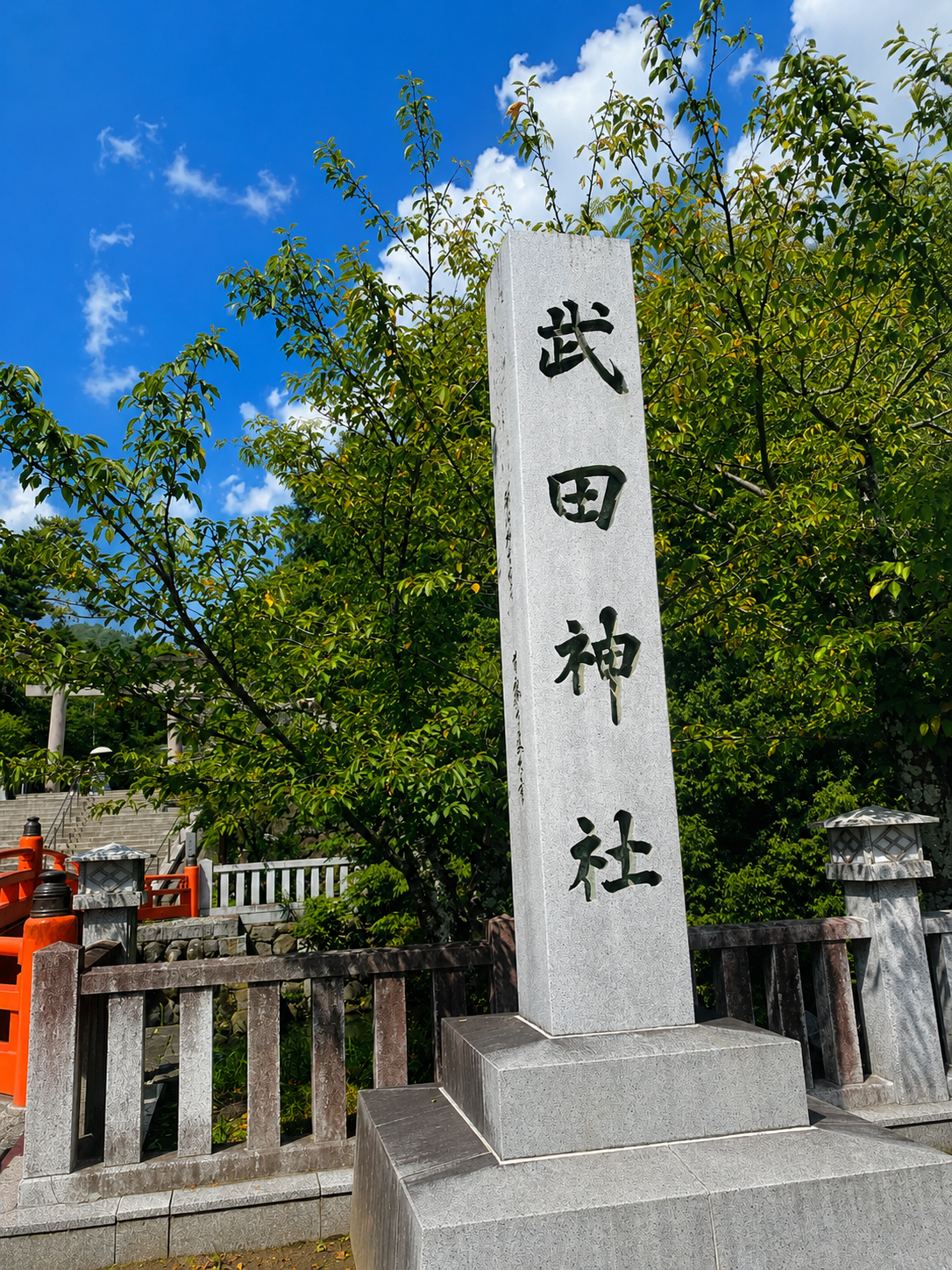
The shrine is dedicated to Takeda Shingen. It stands on the grounds of Tsutsujigasaki-yakata, the residence where he actually lived.
A residence, not a castle.
A saying attributed to Shingen holds that people are the castle, people are the stone walls, people are the moat. Whether or not he said it, the Takeda are known for not having built heavy fortifications here. The place has a completely different character from Maizuru Castle down by the station.
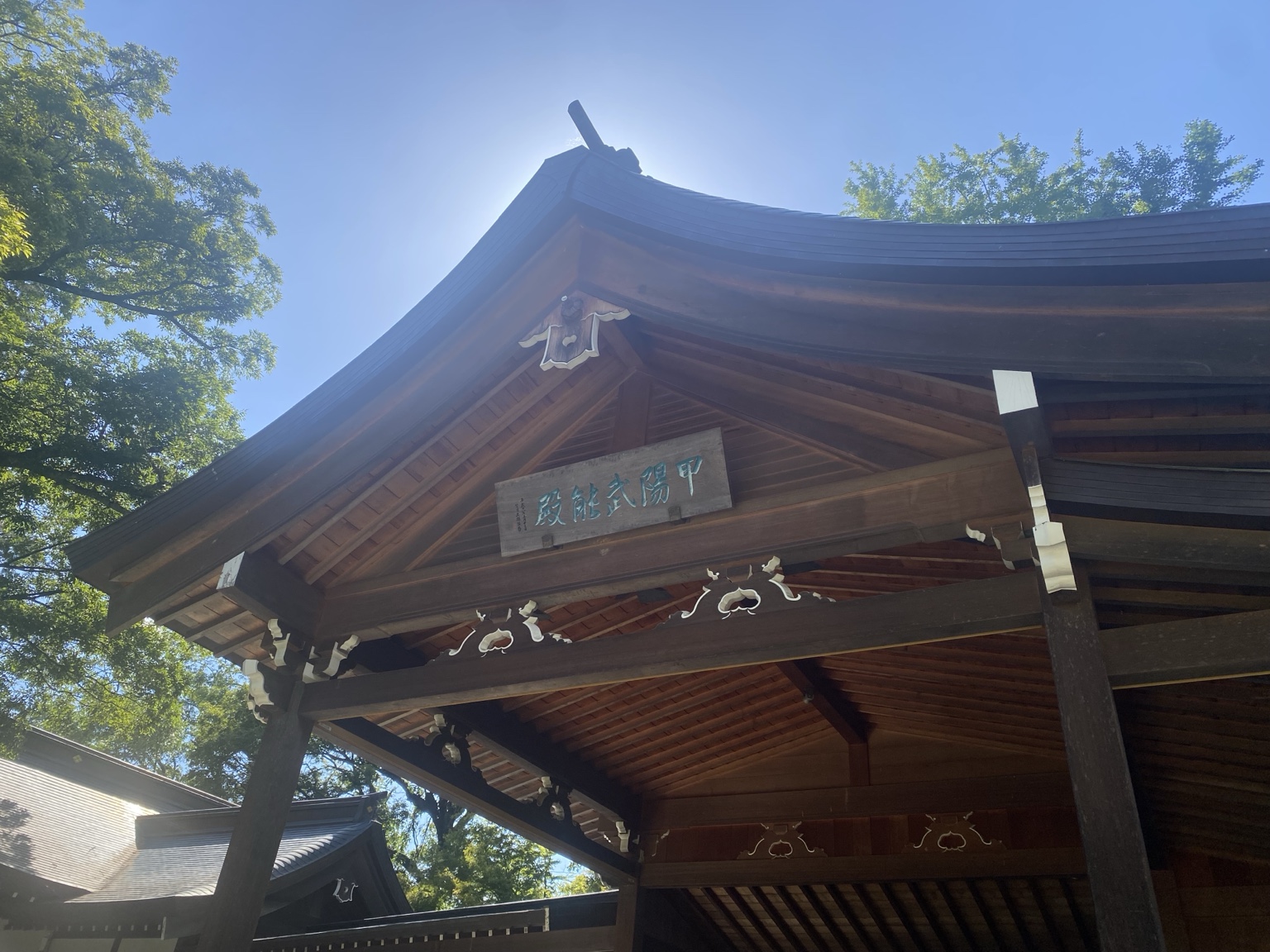
There is a Noh stage in the grounds, called Koyo Buno-den. Shooting into the sun, all I could really see was the curve of the roof.
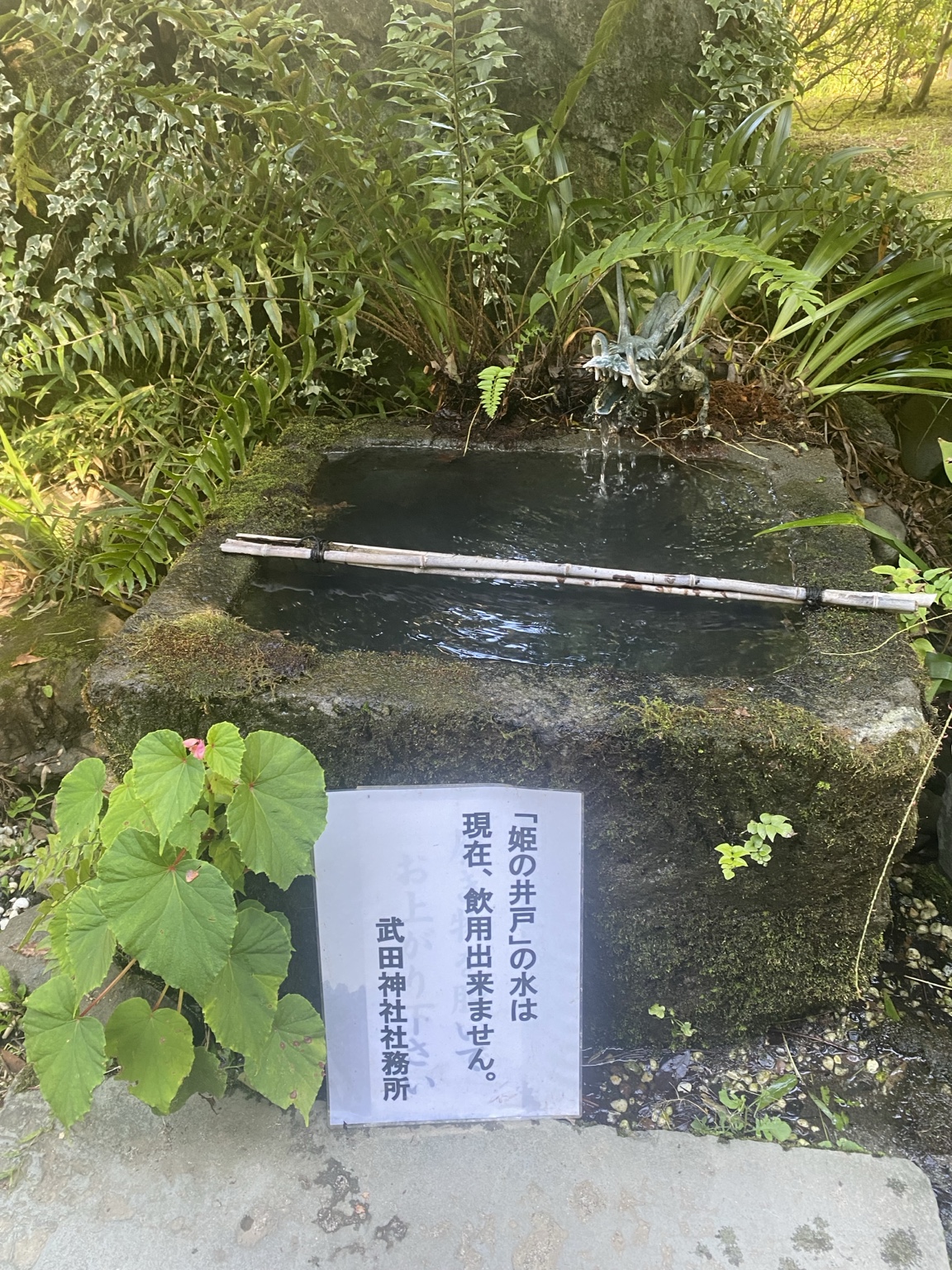
There is also a well called Hime no Ido, the Princess’s Well. According to tradition, its water was used for the first bath of Shingen’s daughter.
It is no longer drinkable. A notice from the shrine office says so plainly.
At Kofu Station you can drink mountain water for free, and at the shrine you cannot drink from the well. Perhaps that is the right order of things.
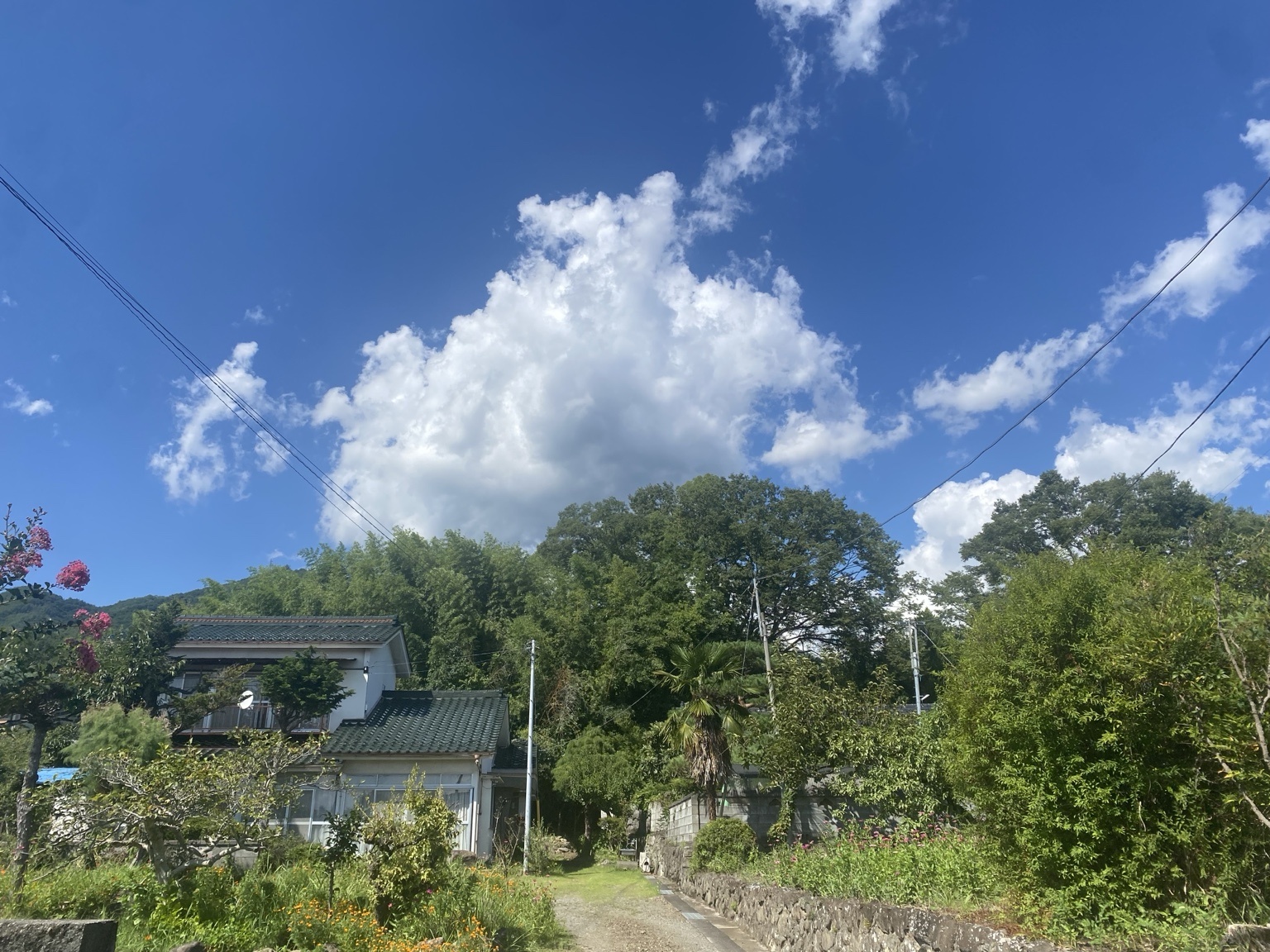
I walked around the neighborhood for a while.
Towering clouds. Green mountains. Tiled roofs.
Three straight days of travel had worn me down. Standing there, some of that lifted.
Overall
Kofu Kokubo is a difficult gym to reach.
One bus every 90 minutes. The fact that the official site says only “13 minutes by car” tells you everything.
That alone caps the score. For anyone arriving by train, this is not a casual visit.
But the gym itself is good.
It is spacious. The machines are spaced out. The stretching area is spacious. It has the kind of quiet room you find in a library.
And then the ventilation diagram, the first I had seen in 80 gyms.
Publishing your own numbers means accepting that people will look at them. 2,628 cubic meters against 920. That single poster says a lot about how this location operates.
For anyone who can drive here, this is a very good gym. Kofu is a compact city, and I came away liking it.
Still, it does not reach Pilgrimage Class. To say a place is worth a special trip, the journey cannot be this much of an obstacle.
Yamanashi Prefecture, visited for the first time. The record moves forward.
Ratings
| Category | Rating |
|---|---|
| Access | ★☆☆☆☆ |
| Equipment | ★★★★☆ |
| How Uncrowded | ★★★★☆ |
| Value for Money | ★★★★☆ |
| Would Visit Again | ★★★☆☆ |
| Overall Score | 10 |
| Pilgrimage Class Rated Yes if this gym is worth making a special trip for, even if you don’t live nearby. | − |
📖 Japanese Review → エニタイムフィットネス甲府国母店レビュー
🐕 SHIBA JOURNEY — No Rush. Your Journey.
The pilgrimage continues.

コメント